Is it worth moving SAP B1 from MS SQL to SAP HANA?
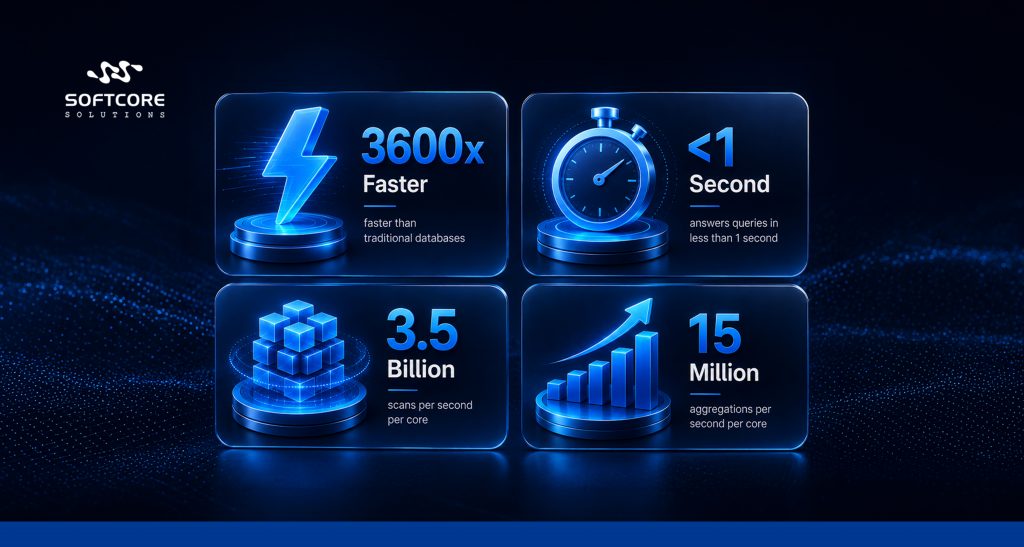
Yes, it is recommended to move your SAP B1 database from MS SQL to SAP HANA. As per SAP, it is significantly faster than other database management systems (DBMS) in the market today. It offers;
Besides speed, what exclusive features does SAP HANA offer that are completely unavailable on MS SQL?
For today’s businesses, speed is critical. SAP B1 HANA is more than speed. It offers,
1. Multi-tenancy – SAP HANA allows multiple tenant databases to run in one system, thus sharing the same resources of memory and processor. However, each tenant database is fully isolated for security and control.
2. Scalability – As the business scales, SAP HANA supports terabytes of data in a single server, and even further scalability is made possible by implementing a shared-nothing architecture across multiple servers in a cluster.
3. Spatial Processing – SAP HANA provides native support to store, manage, and analyze location-based (geospatial) data. This is helpful for businesses dealing who require location insights and need to perform complex calculations.
4. Streaming Analytics – Store, query, and apply machine learning (ML) to streaming data to discover trends over a period. These data sources include sensors, plant equipment, and Internet of Things (IoT) devices.
5. Data Integration & Replication – SAP HANA offers comprehensive features to handle complex data scenarios. SAP HANA allows ETL (extract, transform, load) and ELT as well as real-time data replication, bulk-load processing, data transformation, and built-in data quality and enrichment services.
When is it worth moving to SAP HANA?
1. Do you need significantly faster reporting and analytics? Then SAP HANA’s in-memory database can dramatically reduce report and dashboard execution times, especially for large datasets, compared to traditional disk-based DBMS.
e.g. : A factory producing industrial pumps runs a daily production efficiency report across 3 plants, 1,500 SKUs, and 5 years of history. The report takes 25 minutes on SQL Server. With HANA, plant managers can generate it in seconds during morning production meetings and immediately identify bottlenecks.
2. Does your business rely heavily on real-time decision-making? Here too, SAP HANA is what you need as it handles complex queries, inventory analysis, and reporting with exemplary speed.
e.g. : An automotive component manufacturer wants production planners to instantly see the impact of a machine breakdown on inventory levels, open sales orders, and raw material requirements. HANA enables real-time analysis, helping production planners reallocate production before deliveries are affected.
3. You want to leverage HANA-exclusive functionality – SAP HANA’s features include advanced analytics, semantic layers, predictive capabilities, and certain HANA-optimized SAP B1 innovations are only available on HANA.
e.g. : A food manufacturer wants interactive dashboards showing scrap rates, production yields, and inventory turns with drill-down capabilities to supervisors. SAP HANA’s analytics and dashboard capabilities provide a richer user experience compared to the traditional SQL DBMS.
4. Database size and transaction volume are growing rapidly – With the company’s growth, it is natural for the size of the database to shoot quickly even before one realizes. Large catalogs, numerous transactions, and years of historical data can benefit from HANA’s architecture.
e.g. : A fast-growing e-commerce business expands from 50,000 to 500,000 orders annually. Users begin experiencing slower report execution and longer query times. SAP HANA provides reliable performance even as data volumes grows.
When should you stick with MS SQL?
Current SQL performance is Satisfactory – If your business requirements are met with Microsoft SQL DBMS, there is no need for a forced migration to SAP HANA.
Your have simple reporting needs – If you have standard operational reports with modest transaction volumes, there won’t be any significant difference in reporting time. There is no justification here for an upgrade.
Migration Cost outweighs Benefits – Do not forget licensing, hardware, consulting, testing, retraining, and downtime can create a substantial investment. Ask yourself, does this justify the ROI?
You have strong SQL-based customizations and expertise – Do note, any existing SQL reports, integrations, and in-house SQL skills may require significant redevelopment for HANA. This is an aspect that can easily be overlooked by most businesses.
Why Choose SoftCore Solutions for SAP B1 HANA?
Whether you choose MS SQL or SAP HANA, SoftCore Solutions provides SAP Business One ERP solutions with either DBMS. With over 24+ years of SAP expertise, we have implemented SAP Business One across pharma, chemical, textile, and other industries.
Our SAP HANA expertise and commitment to SAP Business One have bestowed us with the official certification by SAP for SAP Business One Partner of the Year time and again, with the recent one in 2025. Let’s discuss the right SAP Business One ERP solution for your business on a demo call.
Frequently Asked Questions (FAQs):
SAP HANA is a modern database from SAP. It is an in-memory database that facilitates quicker processing, real-time updates, and speedier report generation. Compared to SQL, it is faster, flexible and recommended for big businesses.
SAP HANA is a column-based, in-memory type database that combines OLAP and OLTP operations into a single system. It needs less disk space than some of its competitors and is highly scalable.
SAP Business One ERP has a strong future. SAP is constantly updating it with new features and has already announced that SAP Business One is Forever.